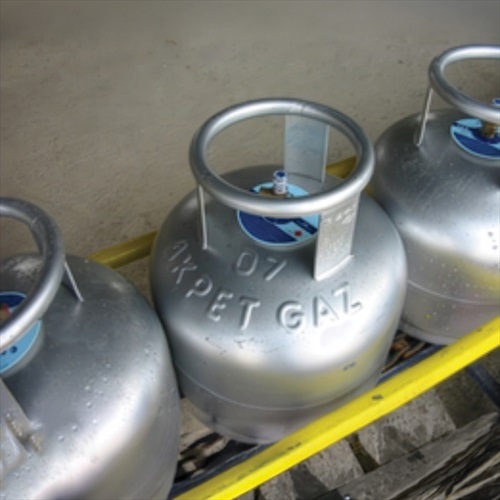
Bottled gas is the name given to LPG that has been packed into a cylinder for portability.
Types of Cylinders:
- 2 kg Picnic Cylinder
- 12 kg Long Household Cylinder (color = blue, diameter = 300mm)
- 12 kg Flat Household Cylinder (color = gray, diameter = 360mm)
- 45 kg Industrial Cylinder
Akpetgaz cylinders comply with TS 55 EN 1442 standards and are manufactured in modern facilities. The 12 kg long, 12 kg flat, and 45 kg industrial cylinders have safety seals and caps indicating that they are full and have passed leak tests. The 2 kg picnic cylinders have plugs that serve the same purpose.
For Safe Cylinder Use:
- You should purchase full LPG cylinders from your authorized dealer.
- Cylinder weights over 2 kg must be transported to the point of consumption and connected to appliances by an authorized dealer or sub-dealer. The gasket must be replaced with each cylinder change.
- The cylinder should bear the brand of the cylinder manufacturer, the brand of the distributor company that owns the cylinder, and the "TS 55" and "TSE" markings indicating that the cylinder was manufactured in accordance with Turkish standards. For cylinders that require periodic inspection according to "TS 5306" standards, a marking indicating that this inspection has been carried out should be checked. In addition, the cylinder must be sealed with a warranty seal cap.
- Cylinder that is rusty, bulging, dented, cut, unpainted, cracked, damaged, etc., should not be used.
- Cylinder and its equipment (regulator, hose) must be TSE certified.
- The regulator should absolutely not be tampered with, and it should be protected from external factors such as snow, rain, dust, oil, and rust to ensure it works properly.
- Cylinder and cylinder equipment must be used in accordance with the instructions for use in a way that does not endanger life and property.
- The hose connection between the cylinder and the device must be a single piece and its length should not exceed 1.5 meters. The hose connections to the regulator and the burner should be made with clamps. Hoses that are old, cracked, softened, or hardened, as well as those used within 3 years of their manufacturing date, should be replaced with new ones.
- Easily flammable and combustible materials such as paper, nylon, plastic, tulle, curtains, etc., should not be kept under or near the stove.
- The cylinder should be used in an upright position, lower than the level of the LPG-burning appliances.
- The cylinder should not be exposed to direct sunlight and should be placed at least 2 meters away from radiators and at least 4 meters away from heaters such as stoves.
- If LPG-burning appliances are located in a small, poorly ventilated area, this area should be ventilated frequently.
- Cylinder bodies should not be used in basements. If used or spare LPG cylinders are kept in a cabinet, ventilation holes should be made under the cabinet door. A spare cylinder should not be placed next to a used cylinder. Each family should have a maximum of one spare cylinder.
- Before connecting a new cylinder to an LPG-burning appliance, any other burning object nearby should be extinguished.
- After connecting a new gas cylinder to the appliance, check for gas leaks at the connection points using soapy water. This check should absolutely not be done with an open flame (matches, lighters, etc.). If a leak is found, in types with a handwheel valve, close the valve; in types with a snap-lock mechanism, close the regulator's latch, remove the regulator, and notify an authorized dealer.
- Do not place pots, pans, or other containers larger than 20 cm in diameter on a burning picnic gas cylinder.
- Excessive airflow and food spills can extinguish the flame and cause gas accumulation. If this happens, first close the appliance valve, then open windows, doors, etc., to ventilate the room and allow the accumulated gas to escape. The appliance should absolutely not be used before doing this. LPG cylinders and related appliances should be removed from sleeping areas before going to bed. Do not leave stoves, camping lamps, or stoves burning while sleeping.
Measures to take if an LPG leak is detected or an LPG odor is felt in the environment:
- You should obtain full LPG cylinders from your authorized dealer.
- Doors and windows should be opened to provide ventilation.
- For cylinders with a flywheel, the cylinder valve should be closed; for cylinders with a snap lock, the regulator's latch should be closed.
- The pressure regulator should be immediately removed from the cylinder, and the cylinder should be taken to the open air.
- Avoid any actions that could create sparks (do not light matches or lighters, do not turn electrical switches on or off, do not open the refrigerator door, do not use a mobile phone).
- The ground, pits, and secluded areas should be swept with a broom to allow the LPG that has settled on the ground to be released into the open air, as it is heavier than air. Call an authorized dealer.
- LPG should be avoided as prolonged inhalation can cause burning in the mouth and throat, coughing, nausea, headache, abdominal pain, dizziness, vomiting, malaise, facial flushing, tearing, and runny nose. LPG-burning appliances should be installed and used according to their instruction manuals. LPG-burning appliances use oxygen from the air. Therefore, sufficient fresh air exchange must be ensured in the room while the appliances are in use. Otherwise, the oxygen in the environment will decrease, leading to suffocation and death. If you encounter the above symptoms, the person should be taken outside; if this is not possible, the room should be ventilated, artificial respiration should be performed, and a doctor should be consulted. LPG should not be applied to the skin. Serious skin burns may occur due to cold burns. In this case, a doctor should be consulted immediately.